
Wholesale price inflation eased to 2.05 per cent in March, as against 2.38 per cent in February, government data showed on Tuesday. The wholesale price index (WPI) based inflation, however, rose year-on-year.

Wholesale price inflation marginally rose to 2.38 per cent in February due to expensive manufactured food items like vegetables oil and beverages, government data released on Monday showed. The Wholesale Price Index (WPI) based inflation was 2.31 per cent in January. It was 0.2 per cent in February 2024.

The textile ministry had organised a show at Elephanta Caves in Mumbai to promote the artisans and revive arts and culture.

Various industry bodies have sought immediate government intervention through the imposition of anti-dumping duties, claiming India has seen a surge in imports of Chinese goods over the past two weeks.

India and the US have decided to hold sector-specific talks in the coming weeks to finalise the structure of the proposed bilateral trade agreement (BTA), the government said on Saturday. The engagement between the two countries came in the backdrop of the USA's threat to impose reciprocal tariffs on its key trading partners, including India, on April 2.

Car restoration service provider Super Car Club Garage (SCCG), backed by Raymond chairman and managing director Gautam Singhania, has sought the Centre's green light for a licence to import foreign vehicles for restoration and subsequent re-export.

India's merchandise exports dipped by about one per cent to $38.01 billion in December 2024 against $38.39 billion a year ago, according to government data released on Wednesday. Imports increased by 4.8 per cent to $59.95 billion in December 2024 compared to $57.15 billion in the year-ago month.

eclined for the third month in a row in January, falling by 2.38 per cent year-on-year to $36.43 billion, while the trade deficit widened to $22.99 billion in the month. Imports rose by 10.28 per cent year-on-year to $59.42 billion in January due to an increase gold shipments, according to the Commerce Ministry data. The trade deficit was $21.94 billion in December and $16.55 billion in January last year.

Union Budget has given mixed bag of response for the recommendations of Textile Industry. Some of the provisions in the budget that could have a direct and indirect bearing on the Textile and Clothing Industry are as follows.

India and the United States will finalize the contours, schedule of negotiations, and terms of reference for a proposed bilateral trade agreement (BTA) during a three-day meeting beginning Tuesday. The agreement is expected to be finalized in two tranches, with the first phase focusing on goods trade. The US team, led by Assistant US Trade Representative for South and Central Asia Brendan Lynch, will be in India from March 25-29 to discuss the agreement. Both countries are aiming to conclude the first phase of the agreement by fall 2025.

Extending the job guarantee programme much beyond digging ponds and building roads, work allotted under NREGA may cover garmenting giving employment to lakhs of people, Textile Secretary Rita Menon has said.
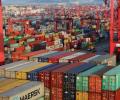
Exporters on Thursday sought a fund of Rs 750 crore for three years to tap USD 25 billion export potential in the US, aiming to seize potential opportunities that may arise as the US President-elect, Donald Trump, has threatened to impose high tariffs on Chinese goods. In its pre-Budget meeting with the finance ministry, Federation of Indian Export Organisations (FIEO) President Ashwani Kumar has also demanded extension of the five per cent Interest Equalisation Scheme (IES).

You may no longer have to rely on international size charts.
The Textile Ministry on Tuesday said it was awaiting clearance from the Maharashtra government for the International Convention Centre to come up at Mumbai with an approximate investment of Rs 700 crore (Rs 7 billion).

Textile exports are expected to reach $50 billion by 2014-15 on the back of new markets.

The new guidelines, effective from August 1, aim to expedite visa approvals for nationals from China and other countries sharing land borders with India.

The country's textile industry is concentrated in a few pockets of Gujarat and Maharashtra in the west and Tamil Nadu and Karnataka in the south.
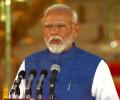
Here is the complete list of ministers in Modi 3.0 and their portfolios:
In the face of testing global conditions, the Ministry of Textiles has stayed the course by introducing timely policy changes and innovative programmes aimed at spurring growth and development across the organised and unorganised sectors of the industry.
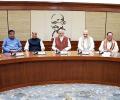
Among the new entrants to the Union cabinet, former Madhya Pradesh chief minister Shivraj Singh Chouhan has been given the agriculture and rural development portfolios, Bharatiya Janata Party president J P Nadda the health portfolio and former Haryana chief minister Manohar Lal Khattar the power portfolio.

The Budget for 2024-25 should focus on employment generation, besides promoting the manufacturing sector, economists attending the pre-Budget consultation meeting with Finance Minister Nirmala Sitharaman here on Wednesday said. The meeting was attended by National Co-convenor Swadeshi Jagran Manch Ashwani Mahajan, Director and Chief Executive of the Institute for Studies in Industrial Development (ISID) Nagesh Kumar, and TCA Anant among others.

'There will be 200 ITIs developed as hubs, while 800 will be developed as spoke, connected with five National Skill Training Institutes.'

Currently, India imposes 30-45 per cent duty on textile products from Pakistan.

The textile industry is the second-largest employer in the country, employing about 32 million, and the government is banking on it to absorb millions of youth.

Government on Monday came out with fresh guidelines to disburse Rs 1,972 crore (Rs 19.72 billion) during the period April 28, 2011 and March 31, 2012, to the textile industry under Technology Upgradation Fund Scheme (TUFS).
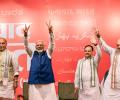
While there are some new faces in the cabinet, leaders such as BJP president JP Nadda and Jual Oram have returned as ministers.

In a move that could improve the weakening sentiment in the Indian textile industry, the government is set to sign a free trade agreement (FTA) with the European Union (EU) by the end of the current calendar year.
The government is likely to come up with export sops for the domestic textiles industry in the upcoming Budget, including a rise in duty drawback rates.
The Centre, in a stimulus package on December 7, provided an interest subvention of two per cent up to March 2009 for pre and post-shipment export credit for labour-intensive exports (textiles, leather, marine products) and SME sector.

The government is expediting visa-related issues to bring technicians to India from any country, not just China, as and when required, to ensure the smooth implementation of the flagship production-linked incentive (PLI) scheme aimed at boosting domestic manufacturing. "If those under the PLI scheme need to get their equipment installed, we try to expedite the ability to get technicians into India from any country, whichever it may be," Union Commerce and Industry Minister Piyush Goyal told Business Standard in an interview.
Undeterred by the poor showing of textile exports after the dismantling of the quota system in January, the government has set a high target of 20 per cent growth to touch $50 billion annual exports by 2010.

The cash-starved Indian textile industry is of the view that the Technology Upgradation Fund Scheme, or Tufs, flagship scheme of the textiles ministry, has lost its shine, as economic slowdown has put modernisation and expansion plans of companies on hold. The industry says there are more basic problems that the government needs to address.

Wholesale inflation fell to a 4-month low of 1.31 per cent in August due to a decline in prices of vegetables and fuel, even though onion and potato prices spiked, according to official data released on Tuesday. Wholesale price index-based inflation fell for the second straight month in August after it hit a high of 3.43 per cent in May. Inflation in July was 2.04 per cent. In August last year, WPI inflation was (-) 0.46 per cent.

Rising skills gap, falling exports, low productivity, rising debt and low foreign investment is jeopardising the target set for the textile and apparels sector

Irani said: "Everyone should work within the ambit of law. If somebody flouts laws unconstitutionally they will not get support from the BJP."
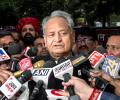
"I sometimes think of leaving it, but the chief minister's post doesn't leave me," Ashok Gehlot famously said earlier this year, in part as a signal to the Congress top brass not to pick someone else for the job if the party wins the assembly polls.

According to sources close to the development, the ministry feels that the National Textile Corporation (NTC), which has put the land on sale, will get better prices than the bid put in by Lodha Developers. The company, which had initially placed a bid of Rs 657.90 crore (Rs 6.57 billion), later hiked it to Rs 710 crore (Rs 7.1 billion), following a request from NTC.
